



Dr Phillip Williams, an EAP lecturer at SBC-USST, has recently published an academic paper titled "Our simple fleet of fish boats: Finances, men and resources of the Counter-armada of 1589" (translated from the original Spanish).

Dr Phillip Williams
The paper examines the often-overlooked English fleet sent against Spain and its empire, which included Portugal, in 1589, following the famous Spanish Armada of 1588. Dr Williams presents a different perspective from historians who typically emphasize the revolutionary impact of Atlantic warfare and often take sides, with Spanish historians trumpeting the bravery and reach of Philip II of Spain (1556-1598), and English historians extolling the virtues and heroism of Elizabeth I (1558-1603).
Challenging conventional views, Dr Williams argues that warfare in the Atlantic and English Channel during this period was profoundly limited. He contends that basic problems—financial, manpower, and administrative shortages—affected all sides equally, restricting the impact of technological advances in sails, ship design, and artillery.
A key point of his research highlights the composition of the English fleets in both 1588 (the year of the Spanish Armada) and 1589. He reveals they were predominantly made up of small, hastily repurposed vessels, thus inspiring the paper's title, "our simple fleet of fish boats." Furthermore, he suggests that even famed navigator Sir Francis Drake may have used oars alongside sails to propel his ships forward.
The paper also explores the disparity between the powerful rhetoric of the era and the administrative reality. Dr Williams identifies a fundamental "cognitive dissonance," where the grand war aims of defending the faith and conquering territories, held by both Elizabeth I and Philip II, were unrealistic. Ultimately, he concludes, everyone was hoping for a miracle amidst these systemic limitations.
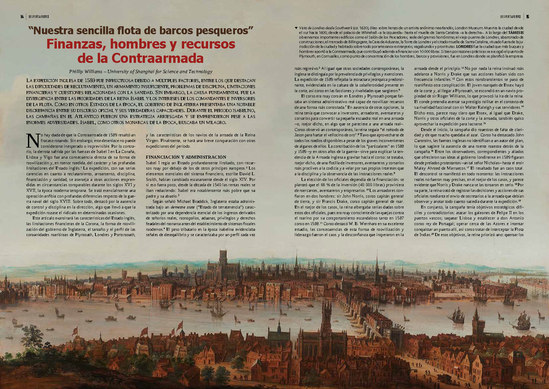
Our simple fleet of fish boats: Finances, men and resources of the Counter-armada of 1589 (translated from the original Spanish)

