



The University of Strathclyde has recently undertaken a series of engagement activities in China aimed at deepening collaboration with Chinese higher education institutions and research organisations, and expanding the scope and models of partnership. On 14 April, the University hosted an Alumni and Partner Event, attended by Professor Laura Bishop, Executive Dean of SBC, and Dr Ronald Torrance, Lecturer in the School of Languages, Education and Cultures of SBC.
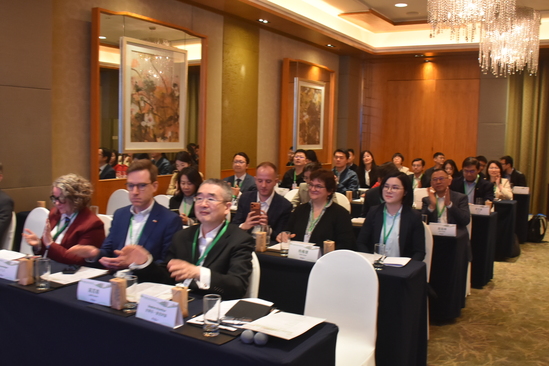
Strathclyde Alumni and Partner Event
During the event, Professor Stephen McArthur, Principal and Vice-Chancellor of the University of Strathclyde, and Professor Campbell Booth, Executive Dean of the Faculty of Engineering and Associate Principal of the University of Strathclyde, engaged in in-depth discussions with nearly 60 guests from universities, research institutions, industry, and government departments, focusing on leading practices in Sino-UK transnational education.
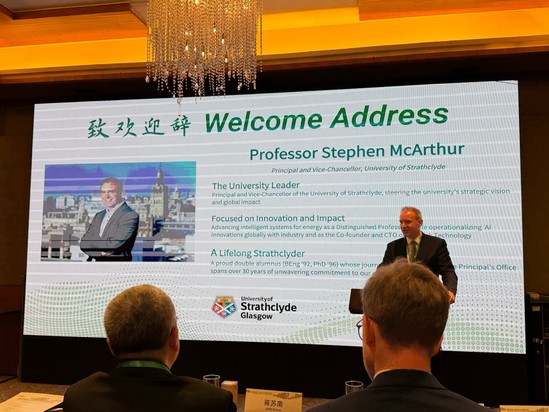
Professor Stephen McArthur delivered a welcome address
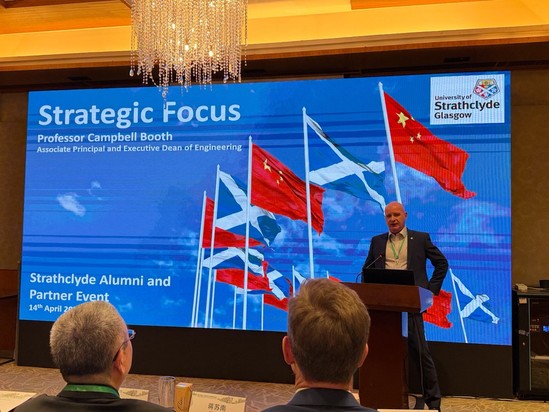
Professor Campbell Booth delivered a speech
Professor Laura Bishop shared SBC’s key insights and significant progress since its establishment in 2006, particularly through its unique “1-to-N” consortium model, which has enabled close collaboration with multiple UK partner universities, drawing on collective strengths in transnational education. She also elaborated on SBC’s strategic approaches to talent cultivation, international exchange, research and innovation collaboration, and staff and student exchange programmes. This year marks the 20th anniversary of SBC, and Professor Bishop extended a sincere invitation to Professor McArthur to visit SBC and join the celebrations.
This Exchange Meeting served as a bridge between Sino-UK education and industry, helping to advance cross-border educational cooperation and fostering cross-sector collaborative innovation. Through engagement with fellow experts and colleagues from other institutions, SBC has gained fresh insights and valuable inspiration to further refine its distinctive educational approach and enhance the quality of student development.
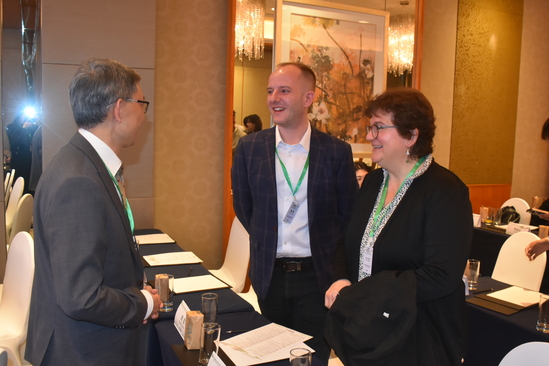
Interactive exchange

