



At SBC in Shanghai, students from around the globe come together, each bringing their own background and aspirations. This is a place to start your journey—a compact campus that sends you out into a world of possibilities.
Often, the best part of studying here often lies in the unexpected: the genuine friendship formed after mustering the courage to connect, the kind guidance offered when you’re lost, the quiet corner discovered in the middle of the city, or the deeper understanding of a culture you once only read about—now felt through firsthand experience.
In this feature, our international students share glimpses of their daily lives. Through their honest, vivid, and sometimes wonderfully awkward moments of exploration and growth, a living, breathing portrait of SBC comes together.
Aaron Jian Xie Ortiz

Country: Panama
Programme: Electronic Engineering
Q: Share a story of a cultural misunderstanding that eventually led to a stronger friendship or a valuable lesson in communication.
A: During a collaborative project, I experienced one of my first cultural miscommunications in Shanghai. I was accustomed to the informal, conversation-starting style of Panamanian individuals. But initially, my Chinese classmates were much quieter. I took the initiative and began making the majority of the decisions because I thought they weren't engaged in the work. Afterwards, one of them gently pulled me aside and told me that they were giving me room because they believed I liked to take the lead. They actually had a lot of suggestions, but they didn't want to interrupt. Once we talked about it, our group dynamic completely changed—we became more balanced, shared responsibilities better, and actually became good friends. It taught me that assumptions can easily create misunderstandings if you don’t talk things out.
Q: How have your interactions with classmates changed your initial perceptions of your own culture and theirs?
A: Before coming to Shanghai, I thought cultural differences would make it difficult to connect with classmates. But the more I talked with people, the more I realized that we all share similar goals—studying, improving our future, enjoying student life. Interacting with classmates from China and other countries helped me appreciate the discipline and group-focused mindset many of them grew up with. At the same time, they showed interest in my Panamanian background and were surprised by how warm and expressive Latin culture is. These exchanges made me reflect on my own identity as someone who is both Panamanian and Chinese. I began to appreciate both sides more deeply, and I also became more open-minded about other cultures.
Andrew Liurencius
Country: Indonesia
Programme: Business Management
Q: How have the teaching methods or mentorship at SBC influenced your future academic or career goals?
A: SBC’s teaching style and mentorship have had a big impact on how I see my future. As an international student from Indonesia studying business management, I really appreciated how classes were more like conversations than lectures. We were encouraged to challenge ideas, use real examples, and actually think like managers not just memorize theories.
What stood out the most was how supportive the lecturers were. They didn’t just teach; they listened, gave honest advice, and pushed me to see what I’m capable of. Because of that, I’ve become more confident about pursuing a global career and aiming for roles where communication and strategic thinking matter.
Overall, SBC didn’t just help me succeed academically, it helped me figure out the kind of career I want to build.
Q: How has living in Shanghai impacted your daily life, independence, or worldview?
A: Living in Shanghai for the past two months has changed me more than I expected. Coming from Indonesia, suddenly being in a city this fast, modern, and full of energy pushed me to grow up quickly. Figuring out the metro, learning how to order food, and handling daily life in a new language made me much more independent and sure of myself.
What surprised me most is how much the city has opened up my perspective. Every day I meet people from different backgrounds, and it feels like I’m living in a place where the future is happening right in front of me. These two months haven’t just been an adjustment, they’ve helped me understand the kind of person I want to become and the possibilities waiting ahead.
Joseph Lee Korpalski
Country: The UK
Programme: Electronic Engineering
Q: Beyond the curriculum, what is the most valuable academic skill or way of thinking you've developed here, and how did a lecturer or a specific class help you develop it?
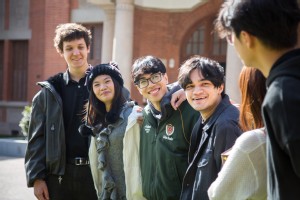
A: As an exchange student, I have had to adapt to the new course as I was in Computer Science at LJMU (my home university). Studying at SBC has been an opportunity to test and develop my academic skills as while some of the modules aligned with my previous course, much of the content I was not familiar with and have not covered since A-Levels (pre-higher education).
As an example, in my class for Local Communications Systems and Applications, I went in with some basic knowledge of data communication however I was able to expand this knowledge throughout the module, particularly in regards to signals and the actual methods of data transmission.
This experience has improved my ability to adapt and tackle complicated topics with confidence even if I have a limited experience or background in them.
Q: Forget the tourist guides—what is your personal hidden gem in Shanghai (a café, museum, market, or street) and what makes it special to you?
A: Forget the Bund. My true Shanghai happy place is a tiny, unnamed lane behind the Fuxing Park area in the former French Concession. It's not on any map I've found. To me, it's Vine Lane, for the lush wisteria covering the old brick walls.
What makes it special is quietness. Just a few steps from the bustling streets, you enter a pocket of calm. You hear birds, neighbors chatting in Shanghainese from open windows, and the clink of tea cups. An elderly man often tends to his potted plants there. It feels like a glimpse of the local, residential Shanghai that moves at its own gentle pace. It’s my secret reset button in the middle of the city’s energy.
Regina Devonesque Edri Elbin

Country: Malaysia
Programme: Business Management
Q: How have your interactions with classmates changed your initial perceptions of your own culture and theirs.
A: When I came here, I was pretty shy and found the big difference in languages and cultures intimidating. I didn't feel too comfortable interacting with my classmates from China, thinking my lack of language would be such a big hassle.
This changed when I used Google Translate to ask a classmate for help in math. Her immediate okay and patience in using the translator to talk with me broke down my initial fears. We became close friends, and through her, I met her kind roommate and the other classmates. I discovered they were not unapproachable but incredibly warm, friendly, and inclusive.

This experience reshaped my perceptions. I don't see my shyness anymore as a limitation, but rather understand that courage and trying form the real keys to connection. My view of my classmates' culture also changed from one of intimidation to deep appreciation for its warmth and strong sense of community. They taught me that kindness is a universal language.
Q: Forget the tourist guides—what is your personal hidden gem in Shanghai (a café, museum, market, or street) and what makes it special to you?A: My personal gem in Shanghai is the Italian-style restaurant called Saizeriya. It is just a ten-minute walk from campus, making it very convenient. I go there to eat rather frequently for lunch during the weekdays. I always order spaghetti and then chocolate lava cake for dessert. I tend to get hungry rather easily, especially during lunchtime, so I have to order two courses. Another attraction is its price-the price is much lower compared to other local Chinese restaurants that I have been to. I like the food so much, and with the satisfying dessert after, I could feel really full. Then, after eating, I usually would stay there for an hour or two to quietly study my notes and do my homework. It is pretty quiet and efficient to work there.
Waziri Moussa Tidjani
Country: Niger
Programme: Business Management
Q: Describe a moment when the city of Shanghai surprised you, either by challenging a preconception you had or by offering an unexpected convenience or experience.

A: My initial experience with Shanghai's subway system was a genuine surprise. Before arriving, given the sheer scale of the city, I had anticipated a congested and confusing network. Instead, I found one of the most streamlined and well-managed public transport operations I have ever encountered. The clear signage, immaculate stations, and the punctual, frequent arrival of trains made navigation effortlessly smooth.
The most striking feature was the seamless digital integration. I could manage everything—from entering the subway to making retail payments and even renting a public bike—all through a single smartphone application. This level of efficiency completely redefined my expectations for urban infrastructure and convenience.
Furthermore, I was pleasantly taken aback by the warmth and helpfulness of the locals. On several occasions, when I appeared disoriented, strangers approached me unsolicited to offer directions. These minor but significant interactions made me feel truly welcome, revealing a side of Shanghai that is far more personable and hospitable than one might expect from such a colossal global city.
Q: Forget the tourist guides—what is your personal hidden gem in Shanghai (a café, museum, market, or street) and what makes it special to you?
A: One of the places I love most in Shanghai is a quiet spot along the Xuhui Binjiang riverside. It’s not famous at all, but that’s exactly why I like it. While the Bund is always full of people, this area feels calm and open. I usually go there in the early morning, when the sun is just rising over the Huangpu River. The city is still half-asleep, and you can see people jogging, stretching, or dancing gently to music. The atmosphere feels warm and real.
What makes this place special to me is how balanced it is. I can enjoy the amazing skyline without the crowds or noise. Sometimes I sit on a bench and just watch the boats move slowly on the river. In those moments, I feel connected to everyday life in Shanghai, not the tourist version of the city. This little corner reminds me that even a huge city can offer small, peaceful moments if you know where to look.
Tyler Johns
Country: The UK
Programme: Business Management
Q: Describe your most memorable experience participating in a traditional Chinese cultural activity (on or off campus). What did you learn about Chinese culture that you couldn't have from a book or Internet?
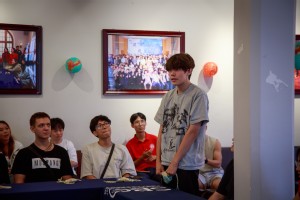
A: My most memorable experience was making a traditional Chinese sachet, or Xiangnang, at our university's Welcome Party. We carefully selected herbs, filled the silk pouches, and stitched them shut. It was a hands-on, messy, and wonderful process.
What you can't learn from a book is the feeling behind the culture. Holding the finished sachet, I understood it wasn't just a craft. The care we put into each stitch and the shared focus in the room made me feel the true meaning of the blessings and good wishes it's meant to carry. It was a small object, but making it taught me about the quiet thoughtfulness and warm symbolism that is woven into everyday Chinese traditions. The real lesson was in the doing, not just the reading.
Q: Describe a time you worked on a challenging group project with students from diverse backgrounds. What was the biggest challenge in collaboration, and what did you learn from it?
A: This semester, I was part of a project team with students from China and South Korea. Our biggest challenge was different approaches to deadlines and planning. Some members preferred a very structured timeline from the start, while others were more comfortable adapting as we went. This initially caused some frustration and miscommunication.
From this, I learned that getting on the same page is the most crucial first step. We scheduled a dedicated meeting just to agree on our process—how often we'd meet, how we'd communicate updates, and our internal milestone dates. This simple act of explicitly defining our collaboration style, not just the task, made everything smoother. I learned that in diverse teams, taking time to align your working methods is just as important as aligning your goals.
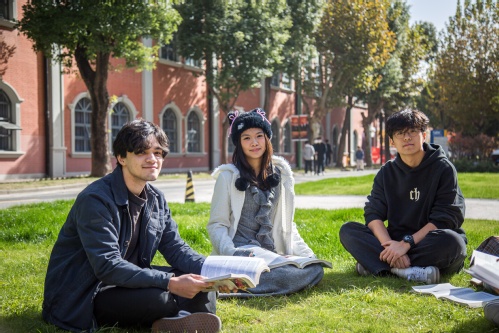
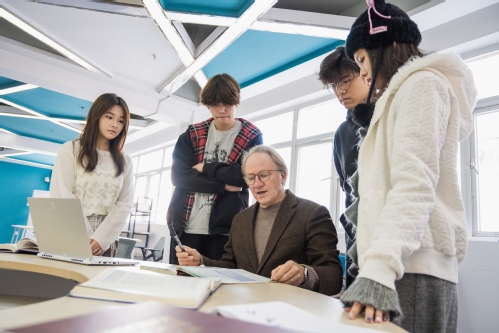
These narratives are more than personal accounts; they show what global education means in practice. At SBC, “international” isn’t an abstract label. It’s an environment built for genuine connection—a place to try, to explore, and to find your place in a wider world.
Here, cultural exchange moves past theory. It forges lasting friendships across borders and fosters a deeper, more reflective outlook. The SBC story is continually evolving, written by each member of our community.

