



Recently, Dr Naeem Faraz, a lecturer in business at SBC-USST, and WU Jiamiao, a 2026 graduate in Events Management from the College, published their collaborative research paper titled “Digital Twin Environments and Impulse Buying: The Mediating Role of Spendception and the Moderating Role of Control” in Sustainability (Impact Factor: 4.1, JCR-Q2). SBC-USST served as the first affiliated institution, and Dr. Faraz was the first author.
The paper proposes that despite the growing popularity of digital payment methods, little is known about the psychological mechanisms affecting consumer buying patterns. Drawing on the Stimulus–Organism–Response (SOR) framework, this study introduces the concept of “spendception” with two dimensions: perceived spendception ease (PSE) and perceived spendception control (PSC). These serve as mechanisms linking digital twin environments (DTEs)—consumer-facing immersive virtual shopping scenarios that incorporate digital twin-inspired features—to impulse buying. Data were collected from 571 Generation Z consumers engaged in social commerce in Shanghai, China, and analysed using structural equation modelling and machine learning.
Results show that DTEs promote impulse buying both directly and indirectly via PSE, which reduces spending friction. Conversely, PSC weakens this relationship by strengthening consumers’ spending regulation. This study contributes to the literature by conceptualizing spendception as a distinct transaction-centered construct and by extending the SOR framework through a dual-mechanism explanation of how digital commerce environments simultaneously encourage and restrain impulsive consumption. The findings offer practical insights for platform designers and policymakers to balance commercial engagement with responsible consumption, aligning with Sustainable Development Goal 12 (Responsible Consumption and Production).
Reflecting on the research process, WU Jiamiao shared: “During the research, I faced the challenges of designing an effective questionnaire and ensuring data quality. To overcome these challenges, I worked closely with my supervisor, Dr Naeem Faraz, to refine the questionnaire in both Chinese and English and regularly reviewed the collected data. This experience taught me that good research requires careful design and should be grounded in real-world social phenomena. It also inspired me to continue developing my research skills in my future studies.”
In recent years, Sino-British College has strengthened its commitment to research-informed education, embedding research practice across the student learning journey. Through its academic tutoring scheme, the College encourages students to join research groups during their undergraduate studies, where they work closely with their academic supervisors on real-world projects. This hands-on experience helps students develop critical thinking and build research competence from an early stage. The College has also introduced a range of initiatives to foster faculty research engagement and to ensure that research findings inform teaching practice, creating a virtuous cycle between the two. The publication of this co-authored paper in a reputable journal is a compelling example of this approach in action.
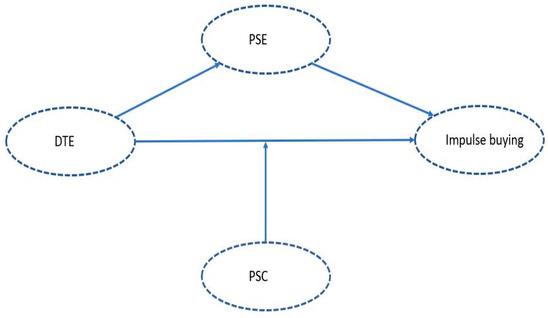
The conceptual framework of this study
Access the paper here: https://doi.org/10.3390/su18126145

