



Recently, Dr. Naeem Faraz, an SBC lecturer in business, published an article titled “A statistical and numerical analysis of porous sliders modeling under a transverse magnetic field with slip conditions” in Multidiscipline Modeling in Materials and Structures. SBC-USST was the first unit, and Dr. Faraz was the first author.
The condition of the surface on which a super-hydrophobic plane is moving is of great importance. The principal objective of the study is to examine the porous slider (PS) with a uniform transverse magnetic field (TMF) and slip velocity.
This study used similarity transformation methods to change the governing partial differential equations (PDEs) into a set of ordinary differential equations (ODEs). The resulting ODEs were solved analytically with Mathematica 12.0. To see how the system would react to different situations, graphical representations of these answers were made. Additionally, a thorough statistical analysis was carried out to confirm the results, which made sure that they were reliable and correct.
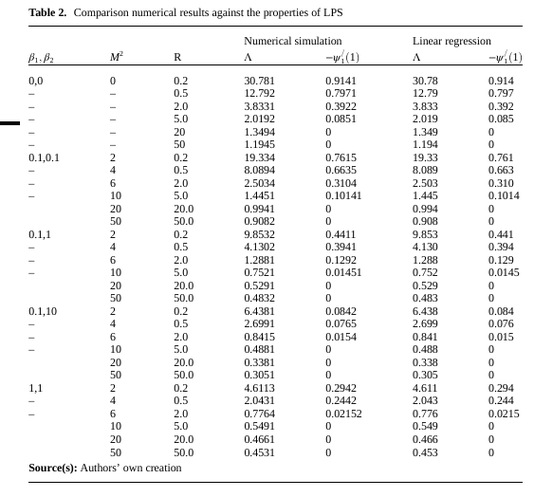
The behaviour of Reynolds numbers (Re), velocity slip and magnetic field is discussed in the context of the simulated results obtained. The tabular solution demonstrates that the normalized drag, lift, slip and Re are all inversely proportional to one another. In the case of a large Re, the formation of boundary layers near the surface gives rise to a decrease in velocity profiles as slip parameters increase. This decrease is further accentuated when a TMF is introduced. Furthermore, exploratory factor analysis has been employed to categorize the most efficacious values of all physical parameters. The categorized values have been validated through the application of confirmatory factor analysis. Finally, linear regression has been applied to predict the obtained solutions, and it has been found that there is no difference between the actual and predicted results through a t-test.
This study is the first to combine both geometries into a single framework. This gives us a better understanding of how they behave in the same physical situations by letting us compare them. A comprehensive statistical validation of these analytical methods is established to make sure they are reliable and useful. This research makes a unique addition to the field of fluid dynamics by combining analytical methods with statistical analysis.
Related: https://doi.org/10.1108/MMMS-01-2025-0008

